Mitigating climate change requires a responsible circular economy and sustainable urban planning. Waste management also requires a green transition. Waste must be reduced and recycling rates increased substantially.
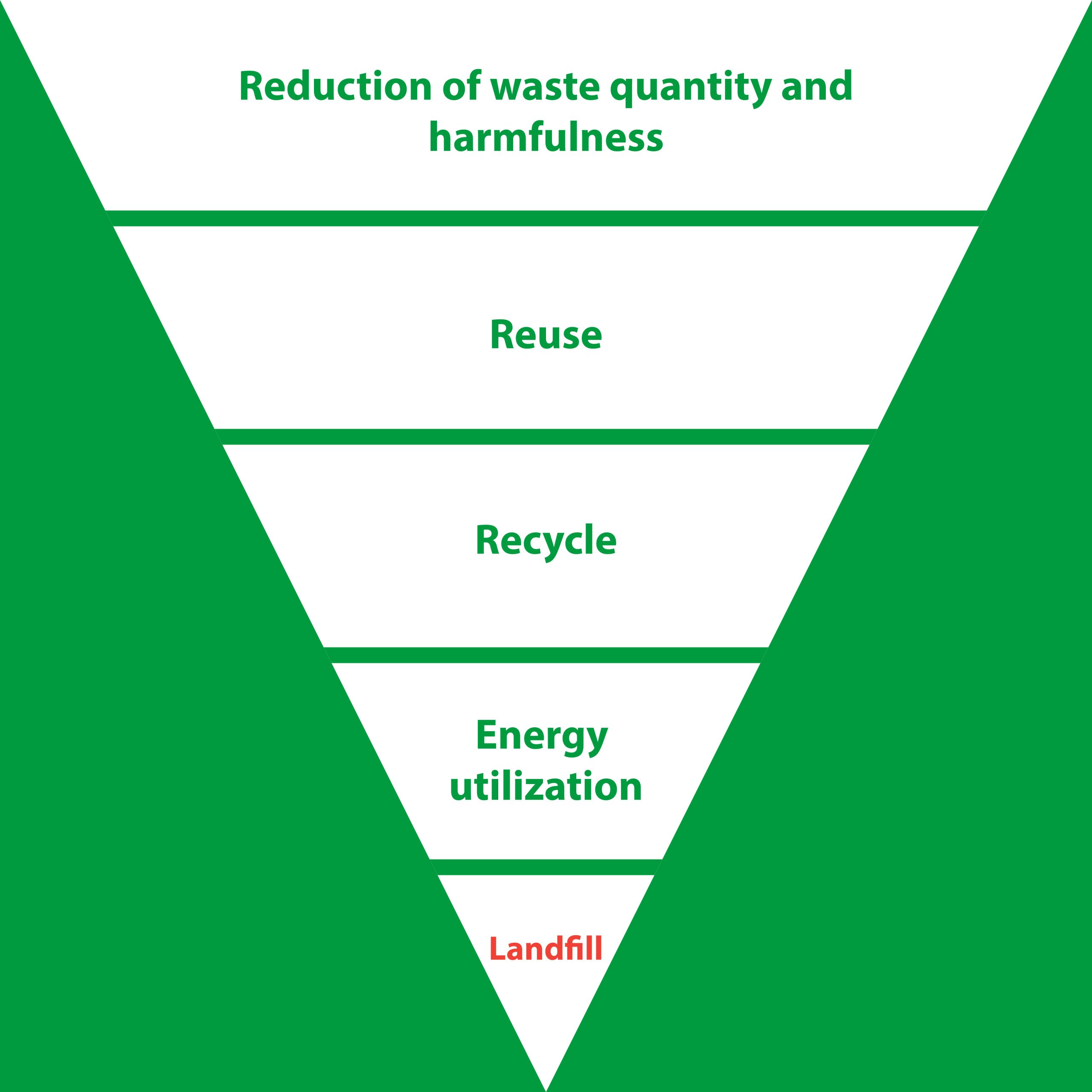
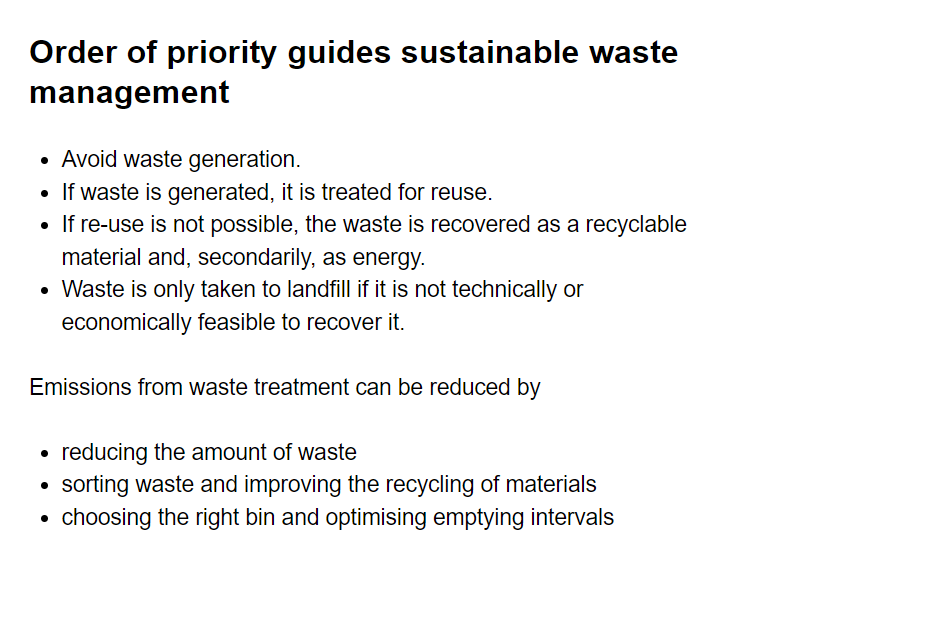
Molok underground collection products support responsible waste management, guided by the principles of the sharing economy and order of priority. Our carbon handprint is growing as we continue to reduce our own carbon footprint and that of other waste management operators.
Our values are customer satisfaction, a good workplace, fairness and sustainable growth.
Aiming to increase recycling rates and reduce CO2 emissions
Molok’s basic mission is to enable the efficient collection, sorting, and recycling of waste with the least possible impact on the climate and the environment.
To succeed, the whole chain from waste generation to the reuse of materials is needed.
Responsible from the start
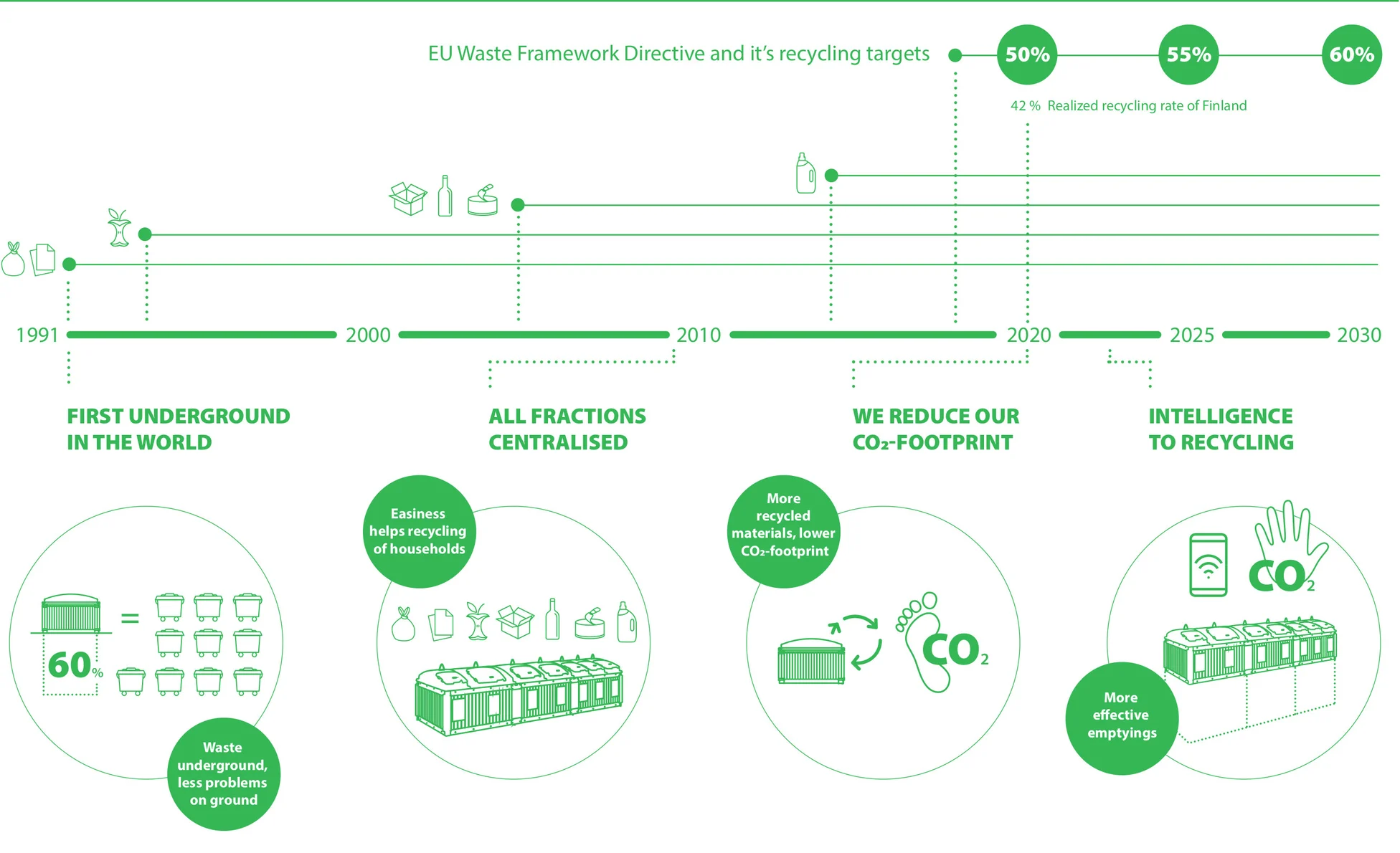
In the early 1990s, Veikko Salli, the founder of Molok and entrepreneur, came up with the idea of a large, partially buried waste container as a solution to the problems of traditional waste points – overcrowding, odours and small animals.
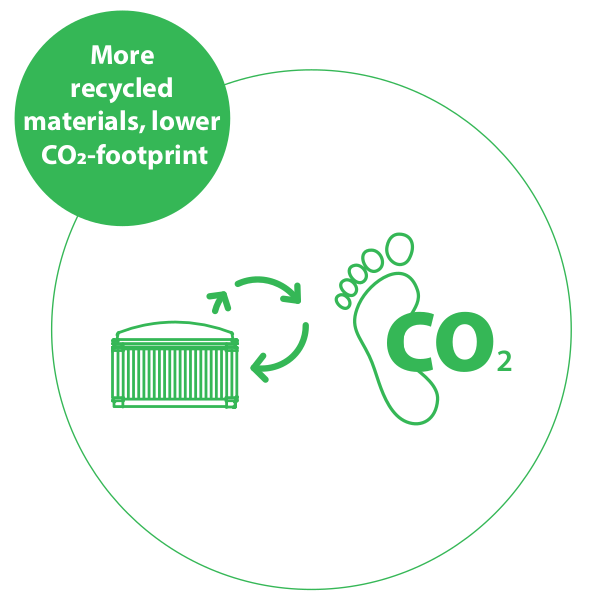
In an underground container, which requires only a small surface area, the waste condenses on the bottom under its own weight and the coolness of the soil reduces odours. It is emptied less frequently than a surface bin, reducing carbon dioxide emissions from transport by a third.
Circular economy saves natural resources
Deep collection of waste serves the circular economy, which is becoming more widespread because
The EU and Finnish society and the state of the environment require a higher recycling rate, careful use of materials and a reduction in the use of limited natural resources.
More and more consumers, businesses and communities attach importance to these objectives.
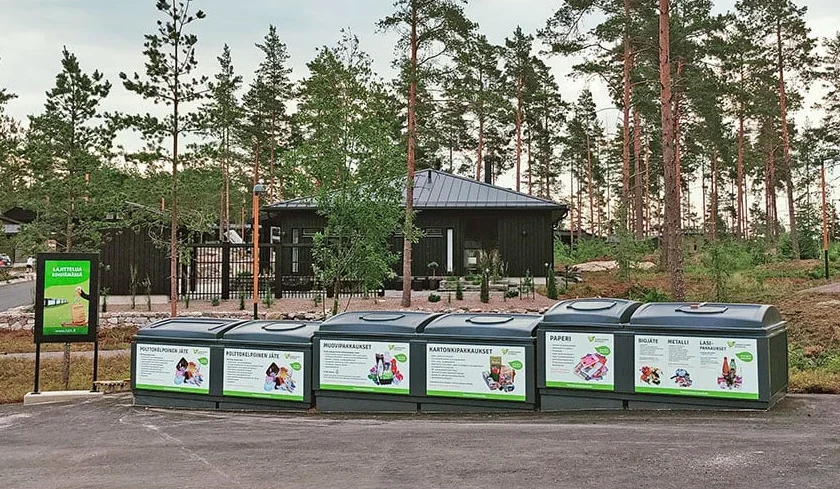
Block collection brings waste collection points close to consumers.
Block collection is a sustainable sharing economy
The block collection developed by Moloksupports the sharing economy. It brings the waste collection point close to consumers and the place where the waste is generated.
Emission reductions can also be achieved through deep collection of the different fractions of an apartment or terraced house. Large underground containers need to be emptied less often than smaller surface bins, which reduces transport.
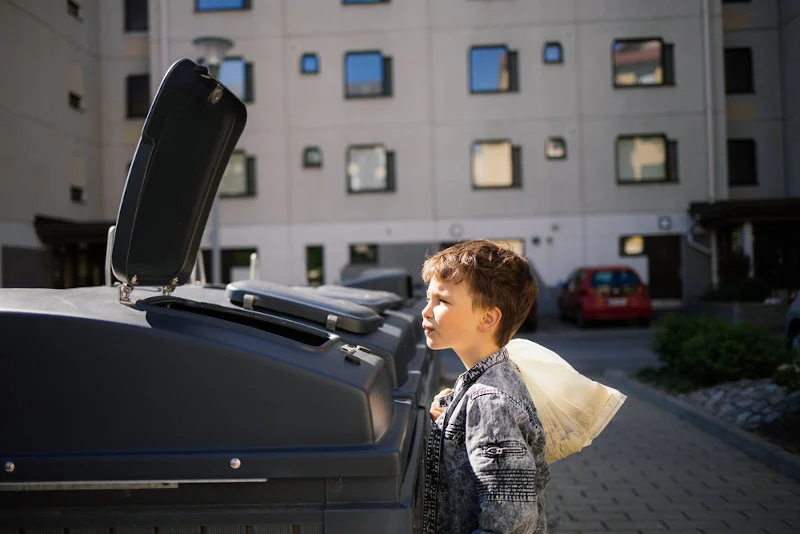
Clean and spacious bins close to home make sorting easy for people. Shared containers have a high utilisation rate. The safety of the professionals who empty them is improved.
Concentrating waste collection at block collection points will make waste transport more efficient and improve traffic safety. The longer intervals between collections mean less waste and fewer emissions than in the case of surface collection and decentralised collection in detached houses.
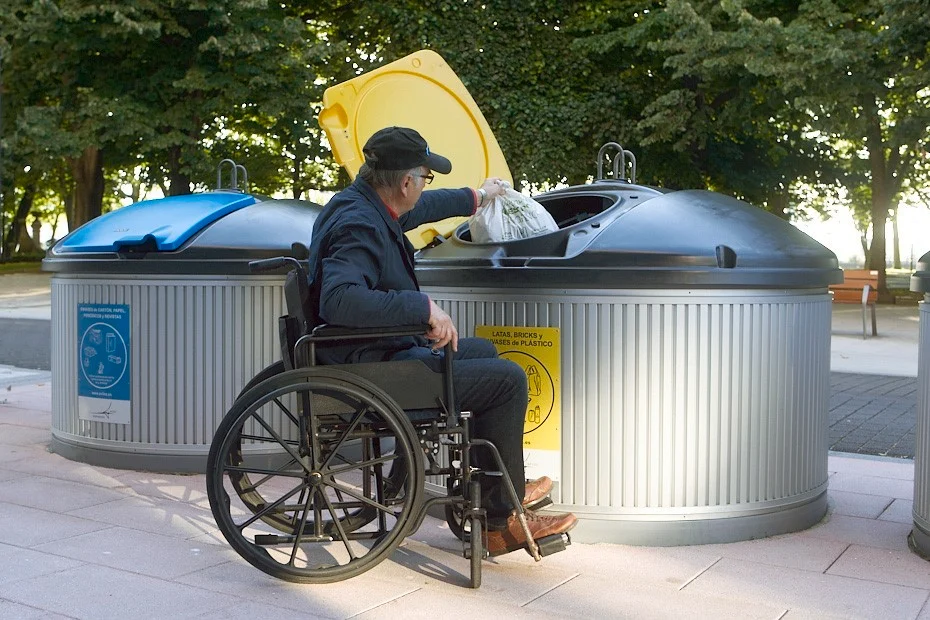
Accessibility is a key component in block waste collecting.
Responsibility in Molok products and activities
Molok continuously reduces its climate and environmental impact and supports the wellbeing of both its employees and society. Molok Oy’s sustainability roadmap is a step-by-step commitment to the EU’s climate and recycling targets and the UN’s sustainable development goals. Among these, the company’s activities are guided in particular by the following issues:
Bringing sustainable deep collection and clean, shared collection points closer to consumers
We support sorting and encourage the reduction of mixed waste
Molok reduces CO2 emissions from waste collection together with consumers and other waste management operators
Molok containers are long-lived and can be easily extended with good maintenance and servicing.
Waste collection planners are assisted by Molok’s experts, who represent the best in their field
Decent work and economic growth
We grow together to strengthen customer satisfaction, wellbeing and working relationships.
Supporting the growth of the circular economy and creating economic prosperity for our stakeholders and society.
We follow the rules and regulations and provide a whistle blowing channel.
Molok Academy strengthens waste collection skills and promotes its sustainability goals.
Deep collection improves safety and ergonomics for workers emptying the containers.
The safety of our employees is developed through active training. For example, all staff have completed a work safety card.
Carbon handprint - How Molok can reduce the climate impact of waste collection
Molok is actively involved in solving the major common challenges of waste management, climate change and biodiversity loss.
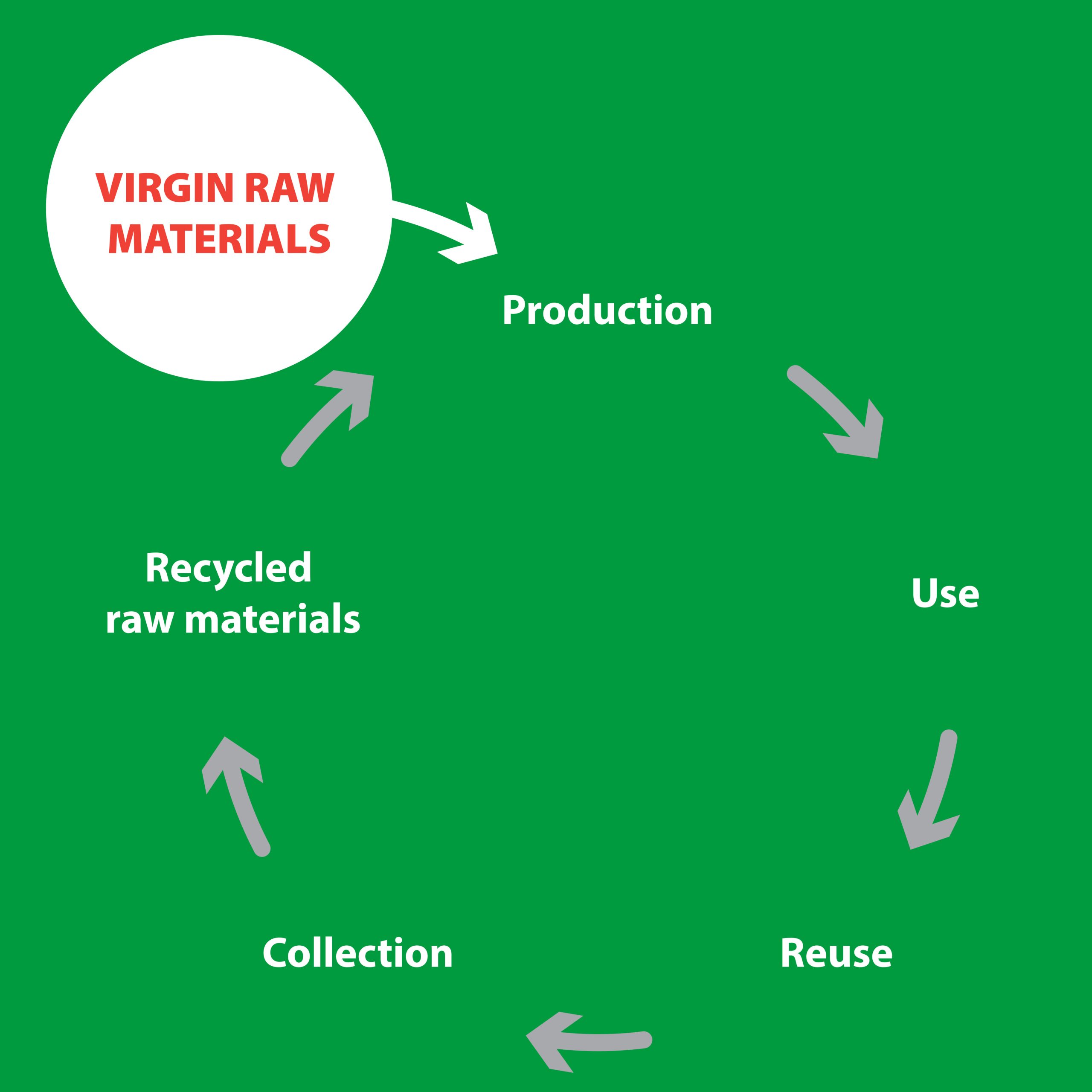
Product development will increase the use of recycled materials in the production of waste containers and reduce the use of virgin raw materials.
Molok is increasing its carbon handprint by enabling more efficient waste collection and by cooperating extensively throughout the recycling chain.
Molok helps consumers, households, businesses and other organisations to promote sorting and recycling and to organise the whole chain in a way that works and is as economical and low-emission as possible.
More sustainable waste management
The whole chain from households and businesses to the collection, transport and recycling of sorted waste can be made more sustainable by using less virgin raw materials directly from nature. Cost-effectiveness comes from the shared use of spacious and space-saving containers and the optimisation of emptying and transport.
In the circular economy, waste is identified and separated into its useful fractions. This improves the material cycle, conserves natural resources and creates more sustainable economic growth.
Molok underground containers require fewer empties than surface bins. This reduces emptying traffic and greenhouse gas emissions from transport.
The lifespan of a waste container can be extended significantly with proper maintenance.
Sustainability of waste collection develops through cooperation
Molok’s basic mission is to improve the collection, sorting and recycling of waste in a way that has the least possible impact on the climate and the environment. To succeed, the whole chain from waste generation to the reuse of materials is needed. Sustainability goals can only be achieved through cooperation.
Contact with waste management companies is important to Molok Oy and our cooperation is very close, depending on the current development projects in the waste management area.
Molok is part of the EU Standardisation Committee working group to jointly develop best practice and safety standards for waste collection containers.
As a member of the association of landlords and property managers, we help landlords with their waste management concerns.
We support the valuable work of the environmental organisations Pidä Saaristo Siistinä ry and Pidä Lappi Siistinä ry for a cleaner environment. Part of the cooperation is professional interaction to find good practices to develop sorting in sensitive natural areas.
Molok is represented on the board of the Finnish Association for Renewable Resources. Together we promote the use of recycled raw materials in Finland.
Molok is also in contact with the Ministry of the Environment, with whom we have, among other things, shared information on the impact of block collection on recycling rates.
Molok is in constant dialogue with building contractors and real estate companies to improve recycling.
Let’s close the loop together
Molok as a part of SULO-Group shares the same target of sustainable growth by closing the loop. By doing so we are for the customer needs and the needs of next generation.
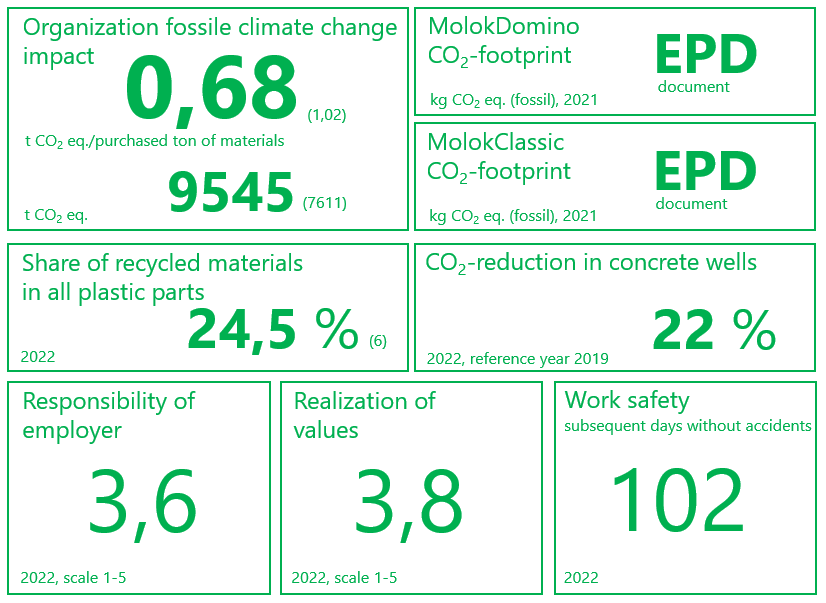
Sustainable development goals and indicators
Molok Oy is committed to the EU’s climate targets of 55% less greenhouse gas emissions by 2030 and a carbon neutral economy by 2050, compared to 1990.
Indicators are configured by external professionals.
The company’s own CO2 emission reduction plan will be revised in March 2023.
In terms of social responsibility, our goal is continuous improvement.
Sources: Molok Oy:n CO2 values / LCA Consulting Employer responsibility, values implementation / Molok Ltd annual employee survey. Molok Supply Chain and Operations Department, Molok’s annual employee survey, Lloyd’s Ltd.